Ad

Wednesday, March 06, 2002

Art stalwarts closing - March 6 - 13, 2002

 Art stalwarts closing 

NUVO Newsweekly, March 6 - 13, 2002

Page 8


CCA Gallery, Alliance Rental Gallery, Indianapolis Museum of Art, Paul Sweeney, Hoosier Salon, Watercolor Society, John Robert Dickhaus


Wednesday, February 27, 2002

“White Light” Joy Jackson – Harrison Center for the Arts – Feb. 27, 2002 – 3 1/2 stars


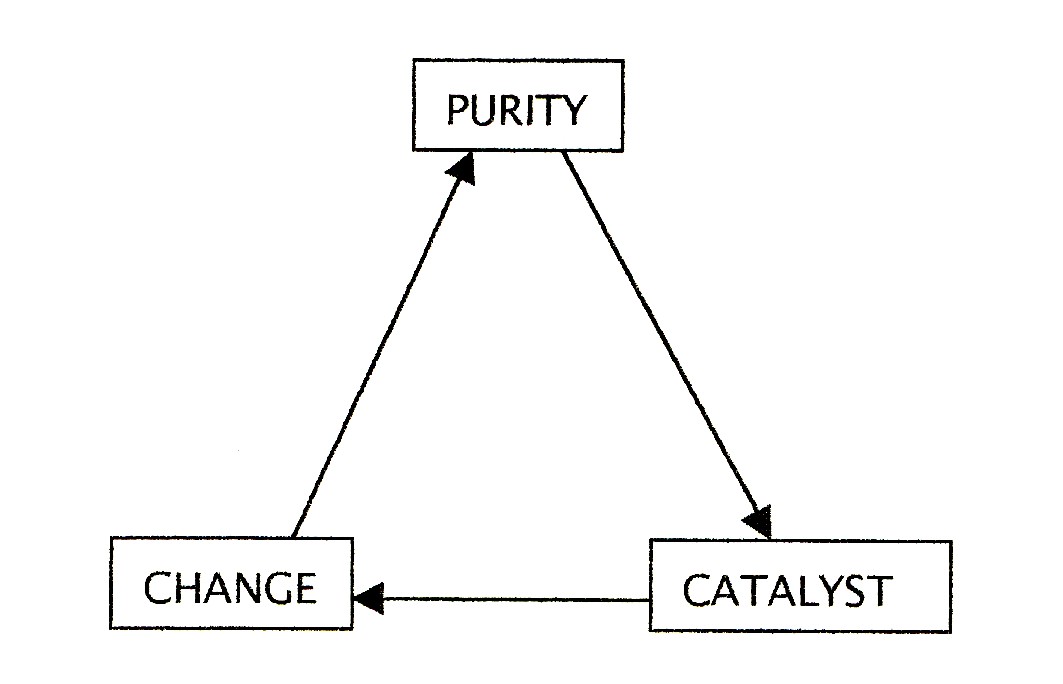
No relation (or inspiration) to the Herron show of last September by the same name, its examination of white light is less precise and simplified into a metaphor for purity as a catalyst for change. Jackson, who teaches glass blowing at the Indianapolis Art Center, having received her MFA in the subject at Temple University in Philadelphia, presents 20 clear, milky and white glass vases sitting upon suspended wire and perfecting eye-level glass shelving cutting across one of the gallery's corners. Jackson, an installation artist of talent, transforms the gallery space into her unique environment moreso than any other paintings-perfectly-centered-on-the-wall exhibit in this space has even come close to with lighting and installation, tic tac mask sculptures and glassware. A 2,000-pound Morton salt block installation is ghostly unnatural with its electric blue-tinged white light emitting from the crevices of the manufactured salt bricks. Under ownership of Redeemer Presbyterian Church the Harrison Gallery is improved with this exhibit as its proof, Through April 7, 2002; 317-514-6787. – Mary Lee Pappas

“Enchanted Bloom” Andrea Eberbach and Riccardo Consciasecca – Hilbert Conservatory, White River Gardens – Feb. 27, 2002 – 3 stars

Illustrator Eberbach finally frames her beautiful pastels appropriately (big white mats in black frames instead of decorated foam board), giving them a proper presentation they deserve. Her pastel handling is soft, perfectly melting the warm, rich colors with the same weight of hand, creating an even and gentle rendering of what might otherwise be a flat image. Eberbach's illustrations are unmistakably hers both for technique and her keen compositional knack. Consciasecca's super close-up digital image photos are sharp and force you to stop and smell the flowers if you never have before. Snapping super zooms of blossoms isn't anything new by any means - a flower at such a magnifying glass perspective is hard to get wrong as the flower abstracts and speaks for itself, but these are well-presented with the digital image allowing for a crisper, cleaner image. Through March 3, 2002; 317-630-2001. -Mary Lee Pappas

Wednesday, February 20, 2002

“A Hobby Handed Down” Elizabeth Young – College Ave. Library – Feb. 20, 2002 – 2 1/2 stars

Numbered handmade quilts, most folded over so they don't hang over into shelves and walkways, line library walls in their mostly very contemporary colors and fabrics. Some older quilt pieces incorporating floor sacks rescued and refiniggled enforce the sweet utility and family feel of this technically everyday ensemble. All of the quilts carry a family story or significance (each explained by Young in a little photoalbum scrapbook), having all been created for use over art, lending this exhibit its true charm. The fabrics and combinations in which they are teamed into patterns are not always aesthetically pleasing, but this is easily discounted when seen as real women's work. Through Feb. 28, 2002; 317-269-1732. – Mary Lee Pappas

Brian L. Phillips - Barnes & Noble – Feb. 20, 2002 – 2 1/2 stars

Phillip's business cards tout "self taught artist," a truth made most evident by the uncomfortable, unmixed handling of the oil paints. The black-outlined, geometric, generic painted portrait heads with dinner plate eyes softly twist into distinct multidimensional, primary-colored, flat-component puzzle piece fragments. Egon Schiele's elementary school doodlings may have resembled this work. Phillips' artistic strength lies in the fluid and tight compositions that feature the broken down angularity of these idealized, abstracted and gaunt faces. Compositional strength would benefit from mixing, layering and playing a bit more with the paint. Through February, 2002; 317-634-2515. - Mary Lee Pappas

Wednesday, January 30, 2002

Cheryl Paswater – The Bungalow – Jan. 30, 2002 – 3 stars

Non-narrative, non-Pop, found image paintings are the stuff of pure aesthetics, here void of Rauschenberg hidden meanings, or influence, and with no revolting against anything going on. They are familiar, mundane, cultural paper images collaged into ambiguous landscaped colorscapes, suitably matted and framed. Bubble wrap, graph paper and some interestingly scribbled poetry get doused with slaps of pure bright mauve and hill green cakey paint to form easily attractive and well-composed pieces with no meaning necessary. Through Feb. 14, 2002; 317-253-5028. – Mary Lee Pappas

“Behold” Sandy Day and Sara Vanderkleed – Hoosier Salon – Jan. 30, 2002 – 2 1/2 stars

Day's strength is with oils. Her stronger, bolder brushstrokes in oil paint befit her sometimes heavy-handed style, creating a maze of yellows, greens and pinks in representational, painterly spots of color, like in the foreground of "Thistle Down," one of many pleasant, tranquil, easy-breezy landscapes. Her true-to-life-color pastel people and landscapes are on the traditionally illustrative side. Vanderkleed's abstracted fields of deep and warm-toned watercolors undulate into dreamy wave landscapes (that turn out to be not that abstract at all after all), made possible by her carefree handling, risk and fate-trusting strokes. One artist's work compliments the other and both are successfully shown together. Through Feb. 15, 2002; 317-253-5340. -Mary Lee Pappas

Greg Brown's misfit masterpieces


NUVO Newsweekly, January 30 to February 6, 2002

Page 8

Mary Lee Pappas


An eccentric repository for orphaned kitsch paintings, Utrillo's Art Gallery, appropriately named for a so-so artist whose work was mass-marketed in the 1950s, falls someplace between a thrift shop and a gallery. “I collect art from the thrift store,“ Greg Brown, artist an owner of Utrill's Art, states. Provincial grandma art, religious kitsch, student stuff, paint by numbers and 1950s schlock reproduction popular prints are among the genres of original kitsch art paintings he emancipates from thrift shop shelves. Some are kept for his personal collection, others are sold.


“More people’s paintings are going to end up at thrift shops the museums,“ Brown says. “Thrift stores make art valuable,“ and affordable for anyone to own.


Brown has been conducting misfit masterpiece search and rescue missions since opening his first shop at 10th and Rural in December 1994. That venue became a successful free-form arts space for five years, before moving to the current location at 3318 E. 10th St., where the focus is kitsch recovery and frame sales. Original fine’s cell anywhere from $5 to $500 to a clientele Brown described as “a real wide variety.“ He adds that some people are embarrassed to admit they like this instinctive, thrift shop sort of art. Regular Utrillo customers “are right across the social spectrum. All shapes and sizes and colors and economic conditions – everybody. It’s neat that way.“ Brown’s collecting advice is, “start cheap and work your way up.“


Brown is supporting the local arts in a very fundamental way. He understands, validates and celebrates the simplicity and necessity of self expression. He knows and already practices with the Arts Council of Indianapolis is preaching in their new the Arts Can Help add campaign: “The arts play an integral role in the daily fabric of our lives… We work hard to support the creative and meaningful work of our arts and cultural organizations as well as our local talented artist.“ The difference is they see “critical activities for the arts community," as their website and TicketCentral in the ArtsGarden, stating, “Your assistance is needed to help us continue to create the best climate for the arts to thrive."


The anonymous, untrained and amateur artists whose salvaged work winds up at Utrillo's paint in a style affectionately dubbed “naïve." Brown defines naïve artist as those “who have a sense of art history and strive to paint in a European style,“ though they actually have no training, sense of depth, composition or color. Creating art is purely joy filled and experiential for them. “I like that kind of sweet art,“ Brown explains.


Some naïve art comes straight from artist to him without the second-hand retrieval effort. Jerome Neil, Jan Boyer and Harry Blomme are three such artist in Indianapolis who are represented at Utrillo's. “I try to promote stuff I love personally,“ Brown says. “Different artists have different needs for representation. I promote amateur art and naive art because I feel it’s important to validate."


Brown, who received formal art training at Indiana University in Bloomington, recently examined his fascination with naïve art by attempting to paint similarly styled figures. “One thing I was really bad at was figures. I thought, I’m gonna do something I don’t know how to do." Humbled, he gained valuable personal insight about how art should be approached. “That was the hardest thing.“ Brown says. “The simplicity embarrassed me. Why could I love it in somebody else and not love it for myself? That’s when I really started to examine my attitude toward art.“


Brown deduced the art he loved represented emotional, private and meditative qualities derived from the primary, free and flexible act of making art. Naïve art became for him, “people really trying really hard to do something they wanted to do." They are honest artistic efforts that liberate personal creativity, produce pride, create a sense of fulfillment and artistic accomplishment. Brown concluded that the sweeping demographic eureka, that anyone can paint, was precisely why he sells and collects this kind of work. “They do it for love and I think it comes through."


Brown adds, “Art is not for the elite anymore." The arts have to be for everyone now, as elitist dwindle and charitable anonymity seems passé. “It’s a breakdown of dominance,“ Brown says. 


Paint by numbers kits, recently celebrated an annual exhibition at the Smithsonian, and once thought to be a violation of art by arts aficionados, testify to the power, need and desire for personal expression – even if simulated. Realistically themed kits introduced people to art, supplies, the process of creating, personal expression (albeit predetermined) and gave them works of art to hang in their homes. The paint by numbers paintings, which Brown collects, became a popular pastime in the 1950s when increased prosperity, consumerism and leisure time were on the rise. The art experience suddenly became easily accessible at an affordable price.


“People are starting to look toward art. The inherent experience of painting and being creative is a good common ground,“ Brown says. “The breakdown of the rules will disperse art into the general population. Some people will be offended and some people are gonna be thrilled. I see the universality of it, but I also insist on my own personal path." Brown knows the principle of joy that creating and observing art produces – and how that experience can be muddled or lost in the arts administration underbrush of grants, commissions or capital campaigns. Of his forsaken finds, he says, “They’re worth more than three dollars to me."


Jerome Neil


“This is my think tank,“ Jerome Neil said of his Wheeler art studio. Born and raised in Chicago, a lifelong Midwestern inhabitant, Neil has been humbly selling (his painting start at $65) and exhibiting his work here and there for four decades. The Wheeler has enabled him to pursue his newfound, full-time artist life. Paintings of airplanes, dinosaurs, trains, cowboys, landscapes, musicians, monorails, Dick Tracy, Roman soldiers and an R2-D2 portrait – “I’m on a Star Wars kick for the kids“ – are perched, displayed and stacked anywhere space allows.


“There’s no special topic. I paint what I want to,“ he says of his diverse imagery that stylistically hops, skips and jumps, from traditional tree filled landscapes to energy and people filled murals. “Figuring out what color you’re gonna to start with is hard, but they’re nope problem,“ he says of his even more different, yet proficiently composed, tribal and angular abstracts. Most of his can’t-pin-the-tail-down instinctive works are randomly named after song titles from his jazz record collection and fueled by his love of world history.


“That is it. That’s the main thing,“ he says of his passion for the past. A whole new series of Paris, London and Amsterdam Street scenes and architectural paintings, inspired by a recent tour of Europe with his children, have begun to creep across what little wall space is left. Could the painting of Notre Dame be named “April in Paris “or “Cool Boppin'"?


“It was wild taking a boat trip up and down the Thames,“ he recalls, explaining that he was too busy “taking in the sights" to paint there. He is currently executing dual images of Piccadilly Square: “All it is, is a place with a bunch of stores.“


Neil usually paints two or three nearly identical paintings, keeping the best of the set for himself. He toils with paint texture to achieve small strokes of painterly thickness as he elaborates on and enhances the finished work – a testament to his compulsive personal perfectionist tendencies.


“Changing light changes the color and movement and presents problems,“ he says if his ceaseless touchups on always evolving paintings. When asked why he painted in oils, Neil matter-of-factly says, “I like the smell of it. “


Wednesday, January 23, 2002

'Zeit ist Kunst" = Time is art

Art Review:  'Zeit ist Kunst' + Time is art

Artworks by Rae Witvoet and Klaas Weert

NUVO Newsweekly January 23 - 30, 2002 

Mary Lee Pappas


Rae Witvoet's Bio - https://www.artland.com/artists/rae-witvoet

Rae's obituary - https://www.legacy.com/us/obituaries/nwitimes/name/rae-witvoet-obituary?id=25569910

Memorial for Rae in NUVO - https://nuvo.newsnirvana.com/arts/visual/memorial-rae-witvoet-1950-2007/article_008dfa38-edb4-5f76-be14-2880caacb47a.html

Rae Witvoet, Klaas Weert, artwork, painting, Lincoln National, Fort Wayne, Sand Ridge Bank, Chicago, Julia Carson, Frank O'Bannon, Ford Foundation, JJC, Hubbard and Cravens, Indianapolis, 911, Dutch, A Moveable Feast, IPALCO, Holland, Indianapolis, Indiana, artist, Amsterdam


Wednesday, January 16, 2002

Annual Herron School of Art/IUPUI Senior Photography Exhibit - Eye Blink Gallery - Jan. 16, 2002 - 2 1/2 stars


Uninhibited spice of life variety is the usual fare at student shows, whether it be Herron or high school, because exploring all media is still available, creativity is encouraged and competitive and the inevitability of a non-art day job has yet to kick in. This body of senior Herron photo work, as a whole, doesn't quite hit the experimentation or risk-taking level that an art school education should allow. An animal rights interactive installation of fur coats and photos does effectively force viewers to participate voluntarily and react/think involuntarily, howver. Overall, the artists' work didn't look challenged from a subject/content perspective - their talents not pushed beyond technically commendable work. But the black and white farm animal images were well-composed and had a personality all their own. Through Feb. 28, 2003; 317-636-6363. -Mary Lee Pappas

Scott Westphal - Munce Art Center - Jan. 16, 2002 - 3 1/2 stars

Five minimalist bronze sculptures make for a mighty art statement when seen corralled together as a body of work. Too often, Westphal's ever so gently wavering steel beam-fabricaw forms have gotten lost in multiperson shows by being stuck against walls as if they were curatorial second thoughts. This small sampling of oxidized bronze work, set into a small, unassuming gallery space void of colorful abstractions, is really perfect for allowing the blocky work to trust the space and create a striking visual experience - you'll forget that the evolving Munce Art Cerrter's floors are brick patterned linoleum. These five, truly minimalist, sculptures softly quiver and stretch out of their industrial facade irtto organic geometrical forms recalling the sensibilities of Indiana's own niega-minimalist David Smith. "Vaas," a piece contorted irvto a domestic vase form, tinkers with the illusionism of space and traditional aesthetics. Through Feb. 23, 2002; 317-873-6862. -Mary Lee Pappas

Wednesday, January 09, 2002

Lyanne Musselman – Out Word Bound – Jan. 9, 2002 – 2 stars

Closed Dec. 29. Out Word Bound is a most excellent bookstore worth visiting regardless of whatever art may be hanging on its walls, and in this case, it's a smattering of forgettable black and white charcoal pet portraits. The face-forward, straight-on doggy likenesses were definite renderings of individual, distinctive pups that made this artist's work look commission worthy and cheerfully admirable, yet mundane and dull from a 10-foot distance. It looked like practice work when creative juices were indisposed or dormant. Close inspection revealed sloppy technical understanding of a pooch package and hesitation with drawing materials. A mere two stars doesn't mean that this artist's work stinks altogether, it means that Miss Musselman has the potential faculty to do work that could garner more stars with patience and practice. Cheers! – Mary Lee Pappas

The Photography of Ben Winans of Brookville, Ind., 1902-1926 - Indiana Historical Society – Jan. 9, 2002 – 3 1/2 stars

Rita Kohn gave a thumbs up review of the Winans photo collection book in the Oct. 11, 2001, issue, but after revisiting the exhibit four times, I thought that a review of the 34 (of nearly 3,000 shot by Winans) exhibited images themselves were worthy of accolades again. History is dictated by and large by authors with opinions and enduring images like those that Winans chose to shoot of modest, everyday Brookville, Ind., life where he spent his entire existence. Nestled in the rolling hills of Eastern Indiana, a stone's throw from Cincinnati and casket Mecca Batesville, Brookville was in its unassuming glory days when Winans snapped it up in its very ordinary grandeur without spectacle or staging. This is no-frills, turn of the century small-town Indiana life at its purest. With journalistic artistry and straight-forward distinguishing style, scenes of the 1913 flood and antiquated hard time rural lifestyles are captured in his crisp glass plate images thankfully accompanied with historical data about the captured event. It gave me quite a thrill to see my own great-grandfather's pharmacy (a stepping stone resident after leaving Kentucky and before moving to the Old Northside) in the backdrop of a most somber and humble Brookville funeral procession. Through Feb. 3, 2002; 317-232-1862, www.indiaiahistory.org. - Mary Lee Pappas

Wednesday, December 12, 2001

The Photography Gallery - The Stutz Business Center - Dec. 12, 2001 - 3 stars

Seven Stutz artists show their stuff, a confetti finale, at the gallery which has relocated to Mass. Ave. The varied (textile, bronze and painted) art pieces work well together. One artist's work doesn't overwhelm another's as the spacious gallery gives even the largest color splashes of Stutz standards such as Mecklin, Darrell and the many very different and design heavy painted mannequin forms by Brooks equal quality wall time. Technically graceful with overlapping, subtle layers of fabric acting like paint, Rebecca Lyons' fabric art is effective, conceptually intelligent and a pleasure to view. Through Dec. 21, 2001; 317-972-1981. -Mary Lee Pappas

Wednesday, December 05, 2001

Night Vision - Utrillo's Art – Dec. 5, 2001 – 3 1/2 stars

No other art space in the city is as authentically and honestly eclectic - really and truly - as Greg Brown's Utrillo's. "Outsider" art in the paint-by-numbers variety and new to antique frame sales (a must stop shop for starving artists) in addition to Brown's own work (far from naive) are what's found during the daylight hours. After dark, his interchangeable, vaguely Gothic, comforting, stained glass-looking painted panels fill the storefront space ceiling to floor, and are illuminated to create an ethereal holiday display, best viewed from the "X" marked on the sidewalk across the street. Drive by and jump out of your car for a minute to enjoy Brown’s work, which is part of an infinite series joy-filled, humble and somewhat spiritual paintings titled The Kingdom of Heaven is like the Psychological Realm. Through Dec. 29, 2001; 317-684-9883. – Mary Lee Pappas

Holiday One Piece Show – Dean Johnson – Dec. 5, 2001 – 2 stars

This variety show needs more cayenne in its jumbled gumbo. The sculpted cherry wood chair and blanket, "Bull Legged Boy," by Natasha Young was of exceptional quality making the pieces that didn't hit her high notes look tone deaf. Though pieces don't adhere to a theme in the sharp gallery space that could make potato sacks look like fine art, there is an unsettling randomness in the overall display that doesn't enhance the quality or beauty of some individually great pieces. Through Jan. 3, 2002; 317-634-8020. - Mary Lee Pappas

Wednesday, November 21, 2001

Jo Legner - Hot House Gallery - Nov. 21, 2001 - 3 stars


Subtle kink meets collage in Legner's loosely lurid, bold, black-outlined Japanimation girl paper mosaics. Beautiful and delicately printed Japanese, Thai and English papers are chopped up (most in 2-inch blocks) and reassembled to give life to her large-scale, convincingly innocent (and one or two not so innocent) and, dare I say, cute, sexy cartoon girls. The fairy straddling a flower, the blue girl spread-eagled on the phone, the bunny-girl investigating carrots, the bare-breasted kitty-woman and the other girls on revue are all perfectly composed for their square format, as if they were individual animation cells. Hardly a parody, these pieces are wildly lively, with a fresh sense of freedom and fun in art, yet are created with care and accomplishment. Legner has a keen artistic vision to be able to piece together seemingly unlike paper colors and textures and then have the end results create the right balance of depth and space for her caricatured beauties. Through Dec. 31, 2001; 686-0895. - Mary Lee Pappas

Tuesday, November 20, 2001

Why Collect Art? by Mary Lee Pappas - Nov. 20, 2001


Why collect art? 
NUVO Newsweekly, 
November 28 - December 5, 2001 
Page 20

Mary Lee Pappas

Art whiners be warned. Hoosiers are buying original art by living artists. Local gallery owners can vouch for what Greg Lucas, owner of G.C. Lucas Gallery in the Meridian-Kessler neighborhood, calls “a very strong art market.” Granted, certain styles of grittier, edgier work are harder to sell, but people are still willing to spend money on art here. 

Local art galleries are welcoming, low-pressure places to visit. But Doris V. Hails, curator at Woodburn and Westcott, has reported that guests have asked if there is an admission charge to peruse her gallery space. The general public in Indianapolis has little experience at visiting galleries, so it is not uncommon for gallery owners to receive calls like, “What is the proper attire to wear to an opening?” and, “Are children welcome?” 

No admission is charged at galleries. Gallery art openings are not black-tie affairs, so come as you are comfortable, whether that means jeans, suit or whatever. Well-behaved children, accompanied by adults, are absolutely welcome, although Phil Campbell, owner of Hot House Art Gallery, artist and father, advises, “Come with an open mind,” as nudity in art is a time-honored standard. 

It is perfectly fine to visit a gallery to browse. Simply walking into a gallery is not a commitment to purchase, so set those checkbook anxieties aside. “There are some people that come in for an art fix,” Hails says. 

“It’s a great thing when people come in just to view the art,” David Kadlec, owner of Eye Blink Gallery in Fountain Square, observes. “By picking up on the stories artists are telling they can open up conversations with their family, their kids. They are taking part in the cultural community.” 

Nora Campbell, art director at the Domont Studio Gallery near Fletcher Place, agrees. “All galleries want people to feel comfortable. The doors are always open to come in and look and appreciate. We’re just glad people come in,” adding that a gallery’s role should be to educate the public about art. 

Art education dialogue is more accessible in a gallery than at a hush-hush museum. Instead of blindly scanning a wall of art in a mausoleum atmosphere, an open conversation can be had at a gallery, and usually with the owner. “I’m here for that!” Hails says. 

Greg Lucas has found that people are intimidated by art vocabulary, so he engages and educates his gallery guests about generic art language, like the meaning of painting “loose” versus “tight” and “modern” versus “contemporary.” It is completely acceptable to state that you like a work of art because it’s “neat” or “pretty.” The ability to rattle off historical, period-specific, academic art jargon won’t impress anyone and will not necessarily enhance an emotional response to any artwork. And art is all about emotional response — especially for the virgin buyer. 

Art connoisseur, or not, the most important criterion for an art purchase should be to like and be attracted to a piece. Kadlec describes this motivator as “people being drawn to the statement being made by the artist.” It’s OK to want something because it’s beautiful or is reminiscent of a trip to wherever, whenever, too. In truth, the numero uno reason people purchase art is because it reminds the buyer of something and provides an emotional outlet. 

Lucas sums it up best: “It’s an emotional thing.” He explains that people are not buying art to match their couch. “The point of a painting is that it should stand out from the sofa.” 

A piece of art cannot be judged by its price tag alone. Worthy and desirable art is not indicated by an exorbitant price or an artist’s tombstone. Price usually reflects innumerable can’t-put-your-finger-on factors. For instance, an artist’s work may be priced high because he can command that price in other cities or because she has been producing work for 35 years and shouldn’t sell for less. 

A low-priced painting can be of greater artistic quality than a higher priced piece. Price points for high quality, original art run across the board, so everyone can afford something. “I remain convinced that it’s not the dollar amount that sells the work. It’s a position of love,” Kadlec says of art purchases. 

Nora Campbell stresses that a customer will “have to love it because they’ll be living with it.” Buying an original piece of art from a local gallery contributes to local economy and the local arts community. It is a contribution to the financial and professional success of the artist and gallery. Art by working, living artists naturally appreciates over time but can’t be guaranteed — so purchasing for investment is discouraged. The majority of people who purchase art aren’t interested in investment anyway. Kyle Blevins, a photographer who recently showed his work at Eye Blink, says that by purchasing original art “you own your art community. It’s a personal investment.” Most galleries offer financing. Lucas says, “We work with [buyers] to help them own the painting.” Clients are offered discounts on repeat purchases and are encouraged to acquire art by the same artists. He also sells gift certificates, has painting savings plans and offers discounts on individual pieces if they are available. Some galleries like Kadlec’s have a fixed price policy. “It’s rare that anyone has asked for a discount,” Kadlec says — but don’t be embarrassed to inquire. 

“We have to,” Nora Campbell says of financing. “Original art is not a mass market. Most paintings are more than what people can just write a check for.” 

Phil Campbell notes that the price range for personal spending on art “is all over the place. The majority spend between $1,200 to $1,500 on average.” 

At Woodburn and Westcott, I witnessed an unassuming patron purchase an Indiana landscape by Lynn Thomsen for $2,200. Stanley Woodburn Hails, gallery manager of Woodburn and Westcott, says, “You wouldn’t have a clue what a customer looks like,” observing that customers are as diverse as the artwork itself. 

Doris Hails admits that some people are hesitant about purchasing real art for themselves because “It doesn’t seem normal to have real art on their walls.” 

Phil Campbell agrees, “They want what’s safe, what their friends have, what blends into the woodwork.” But original art can be more affordable than framing a poster print — and it’s a one-of-a-kind. 

A limited edition, prepackaged Thomas Kinkade print-transfer-to- canvas from the mall (one of 3,900 made to simulate a real painting) will cost $640 and up, depending on the size and the edition. An original figurative watercolor work by Phil Campbell, on the other hand, is only $325. A consumer who buys a big-name Kinkade because it feels safe (all the neighbors have one next to their Nancy Noels) isn’t getting a bargain. In 50 years, the piece a local museum (say the Indianapolis Museum of Art or the Indiana State Museum) would consider acquiring in exchange for a tax deduction, or the piece your grandchildren would be happy to inherit, is more likely to be an original that has a sense of history and withstands the test of time. In 20 years, those Kinkades will probably be on sale in Goodwills and Salvation Army shops. 

Some artists have inadvertently altered the face of local art history with their unique contributions. The significance of their accomplishments, their styles, techniques and local roots all make a piece of original art valuable. 

A buyer who buys based on name alone is an uninformed collector. There are, however, a few notable art personalities who are recommended for your art consumption. Nhat Tran, whose studio is located next to the Midland Antique Mall, is an artist whose lacquer works have been exhibited and acquired by the Smithsonian for their permanent collection. Tran uses an unusual and very toxic ancient lacquer technique to produce work that is influenced by her Asian roots, but inspired by the West. The Hoosier Salon represents the amazing impressionistic oil paintings of Patricia Rhoden Bartles. Bartles’ visions of Southern Indiana landscape have reinvented the familiar Hoosier Group ideals. John Domont is another Indiana landscape artist who recently finished two 15-foot commission pieces for the Riley Children’s Hospital in addition to having two paintings acquired by the Indiana State Museum for their permanent collection. They are but a few artists in Indianapolis who justify Doris Hails’ claim that “We are a wealthy city in terms of the arts.” 

Peruse NUVO’s Galleries space in the Calendar for the most recent shows in the city. Scribble down those telephone numbers and call with all your art inquires. Visit and ask more questions. Don’t be discouraged if you are immediately in love with the first artwork you see.


Phil Campbell, David Kadlec, Doris Vlasek Hails, Doris Hails, Ann Leggett, G.C. Lucas Gallery, Greg Lucas, Hot House Art Gallery, Eye Blink Gallery, Nora Campbell, John Domont, Domont Studio Gallery, Indianapolis Museum of Art, Newfields, Nancy Noel, Patricia Rhoden-Bartles, That Tran, Hoosier Group, Indiana State Museum, Kyle Blevins, Lynn Thompsen, Stanley Woodburn Hails, Midland Antique Mall, Hoosier Salon, Riley Children's Hospital

Wednesday, November 14, 2001

Lynn Thomsen - Woodburn and Westcott - Nov. 14, 2001 - 3 1/2 stars


Thompsen's art is about where we are and where we live. Her pastoral, predominantly green paintings aren't just of the typically expected rural Boone County fields and southern country meadows, but of Eagle Creek and the ultra urban woods of Butler University. The sense of depth and definition in theses scenes is outstanding considering the swiftness at which the strokes look smattered, albeit intentionally, on the paper. Her true color farming fields carry an all too familiar feel that anyone who has driven anywhere in Indiana can appreciate. Thomsen is a skilled artist who fearlessly puts paint down, confidant about space and reality. Through Dec. 31, 2001. 916-6062. - Mary Lee Pappas

**********

Lynn Thomsen, July 30, 1957 - January 3, 2008

Thomsen, Lynn,
January 5, 2008
Indianapolis Star


Lynn Thomsen She passed away at 10:45 a.m., January 3, 2008 at the IU Medical Center, Indianapolis. She was born in Lafayette, IN on July 30, 1957, and lived with her parents in Delphi, until her graduation from Delphi Community High School in 1975. She graduated Summa Cum Laude with a B.F.A. from Herron School of Art in Indianapolis. She went on to teach at Marion College, IUPUI, St. Richard's School, and for the past 7 years she chaired and taught in the Art department at Park Tudor School. Lynn was a landscape artist, and concentrated on scenes of rural Indiana. She has works hanging at the IU Medical Center, The Anderson Hospital, Women's Wing, and in the permanent collection of Indiana artists at the Indiana State Museum, along with many private collections. Lynn was the court room artist at the 1992 Mike Tyson Rape Trial where her drawings were aired on Channel 6 News and ESPN. She currently has a 22 piece show at the Mary Anderson Center for the Arts, Loftus House Gallery, 101 St. Francis Dr., Mount St. Francis, IN. The exhibit will run through March 1, 2008. She is survived by her husband, Clifford Hull, her stepson Clifford Jr., her parents Cliff & Jean Thomsen of Delphi, IN, one brother, Eric (wife Carole) of Delphi, one sister, Teresa Holeman (husband John), of Charleston, S.C.; 4 nieces; Amber Cleavenger (husband Kyle) of Colburn, IN, Cassandra Rowley (husband J.T.) and Erienne Thomsen of Terre Haute, IN., Justine Holeman, of Charleston, S.C., as well as 3 great nephews and innumerable wonderful friends and colleagues. A celebration of her life will be held on Monday January 7, 2008 at 4:00 pm at Flanner & Buchanan Funeral Center-Broad Ripple with a gathering starting at 12:00 pm to service time. Persons wishing to express their condolences may do so by recycling. In lieu of flowers, donations can be made to the Coburn Place Safe Haven 604 E. 38th Street Indianapolis, IN 46205.

**********

In Memoriam: Lynn Thomsen
by Barb Shoup Jan 16, 2008
NUVO


When Lynn Thomsen and I traveled through France together in 1994, she carried a packet of blank cards wherever we went and made sketches on them, which she sprayed with fixative and sent home as postcards to family and friends. I was fascinated by what caught her eye. The pattern of stones beneath the running water of a river, the peeled paint of a shutter were as interesting to her, as worthy of her attention as the Eiffel Tower or the Louvre. She made a sketch of me to send to my husband — not at Monet’s Giverny, but in the corner of a straggly garden down the road amidst hollyhocks whose petals were crumbling to dust.

“You were made to set here to give voice to this, your own astonishment,” the writer Annie Dillard said. Lynn was astonished by everything, and spent her whole life spinning her astonishment into marvelous forms, imprinting herself on the world around her. Art and life were the same thing to her.

There she is in the whimsical living space she created, a loft in an old building on 30th Street, with hornets’ nests, still on their branches, hanging from the high ceiling and birds’ nests, rocks, shells, geodes — bits of the earth she collected, wandering. There’s a fabricated steel swing big enough to hold two people that she hung in the middle of the huge room. A gargantuan blackboard she salvaged from an old school and mounted in her kitchen, chalk tray included. A cat stairway with a nifty bridge to a sleeping perch — because every living being was accommodated in her life.

Lynn’s astonishment at being alive shimmers in her paintings hanging on the walls: luminous plowed fields, trees mirrored in summer-calm lakes — the light in them as real as the light pouring in through the huge loft windows.

You can see the fruits of it in the lives of hundreds of students whom she loved and taught, and who adored her, instinctively understanding that she was not only teaching art, but teaching them how to be. Her countless friends knew it when, again and again, she directed our attention to some small thing that made the world crack open in a way we’d never have imagined and, in doing so, lightened our heavy hearts.

Lynn’s time in the world she loved was far too short. But the light she made wherever she went will live among us always.

Kyle Blevins "The Dead Bird Series" - Eye Blink Gallery - Nov. 14, 2001 - 4 stars


Blevins' large 20-inch-by-24-inch glossy prints taken from a huge Polaroid at Columbia in Chicago are hardly morbid or grotesque, but poignant. One little goldfinch is at rest among brittle, dried roses, the colors of which are dulled and dreamy. They romantically convey a sense of peace. The photos evoke memories of life and loss, giving the show a particularly timely and universal quality. Through Dec. 31, 2001. 636-6363. - Mary Lee Pappas

* The son of a funeral director, Blevins recognized that these discarded lyrical and romantic metaphors for life and soul were sadly and ironically dead and found a deep profundity in the ignored and forgotten, yet still beautiful bird life. He collected some dead birds and encased them in liquid latex like bugs in amber, which were either suspended in sheets of glass or shadow boxed, then photographed.