An art critique as well as exhibition preview and overview archive spanning from 1999 to 2012 by Mary Lee Pappas, the art critic for the alternative weekly newspaper, NUVO, and visual arts columnist for the daily paper, The Indianapolis Star. Indianapolis, Indiana.
Ad
Wednesday, May 15, 2002
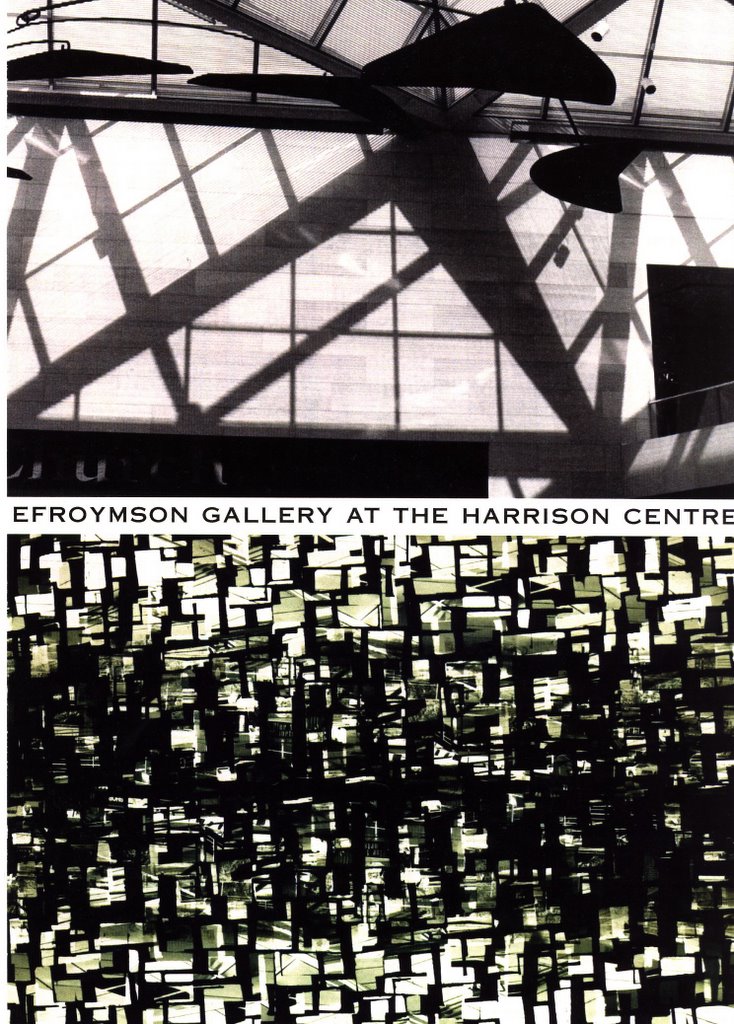
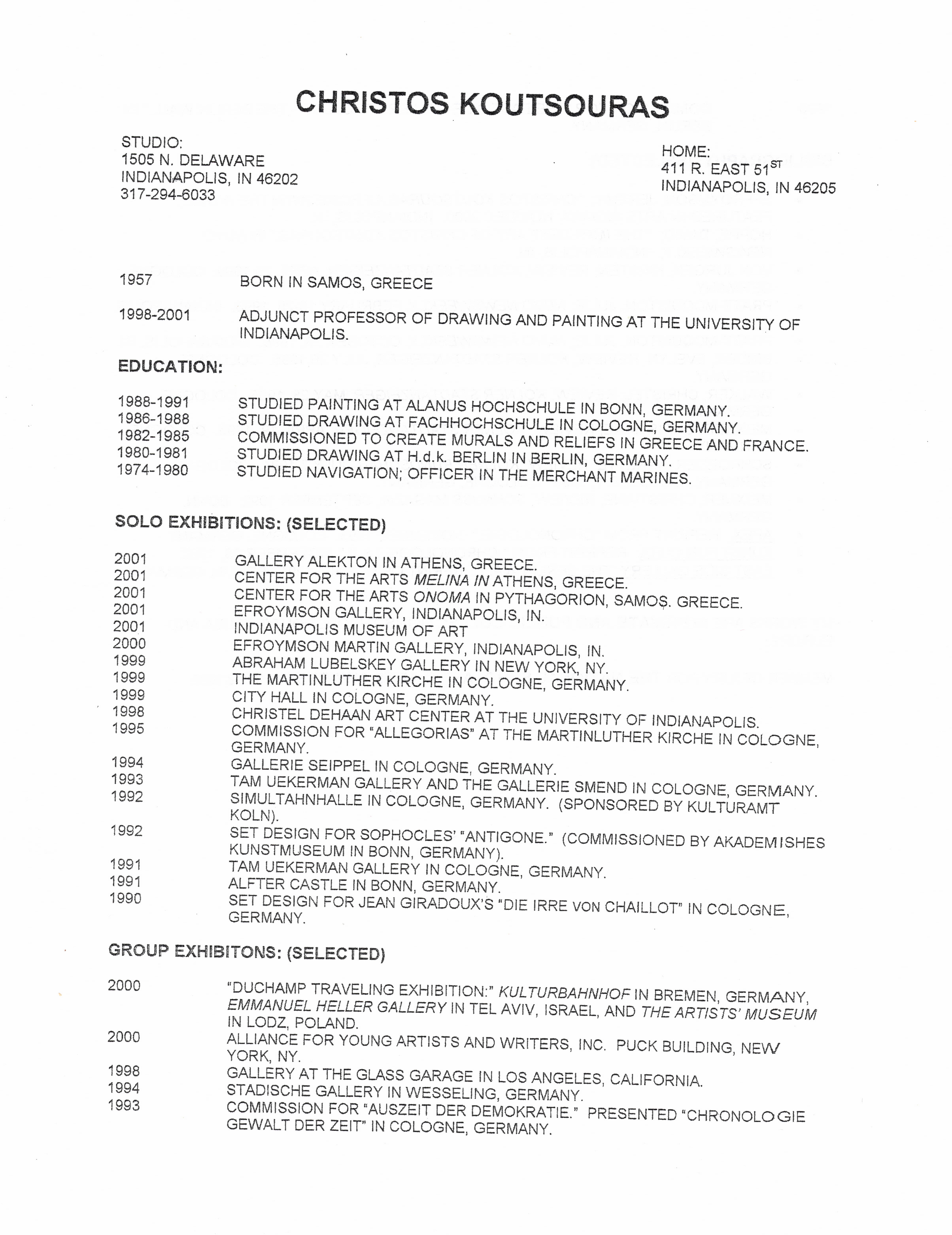
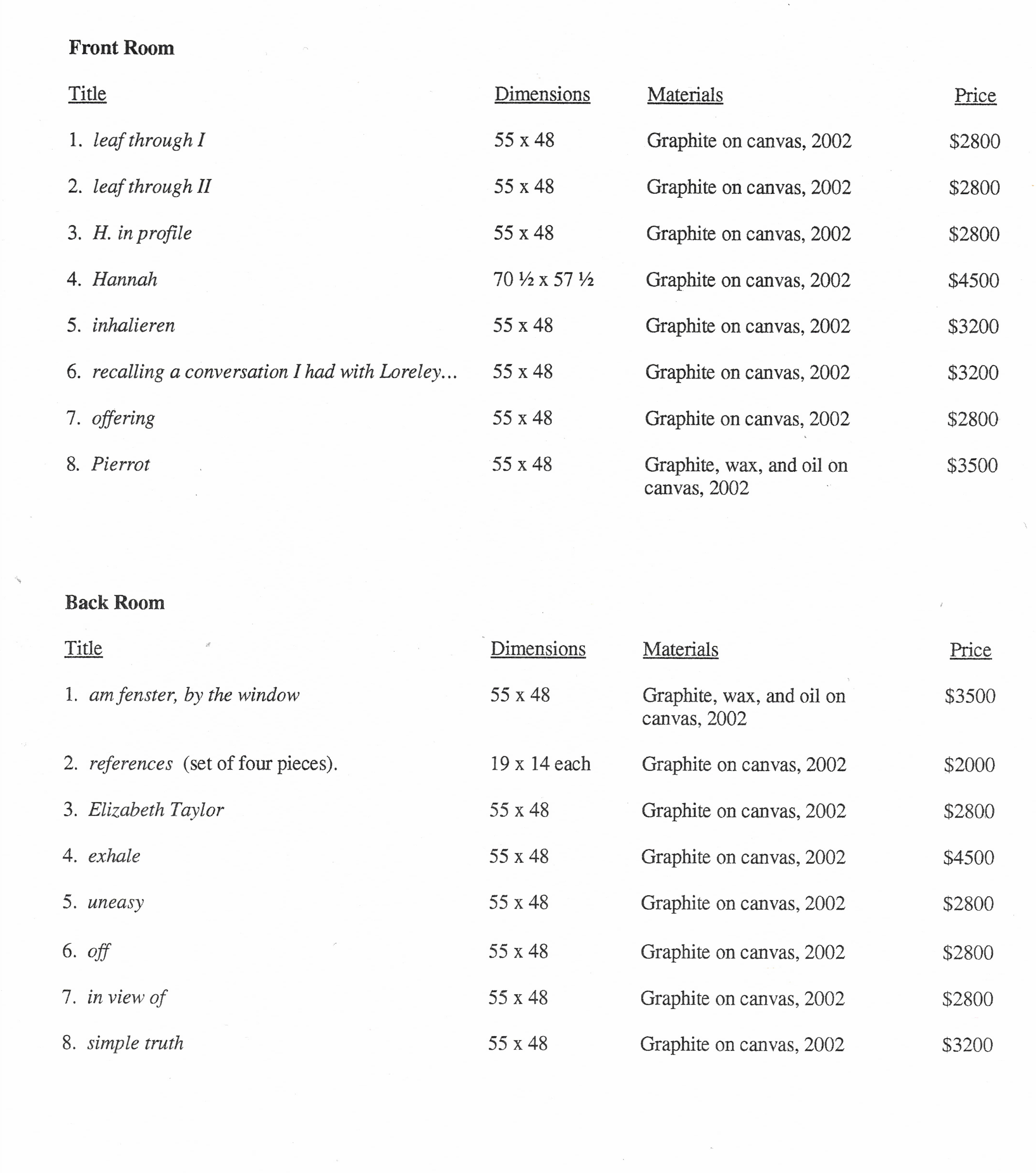
Oreho tehkhnee/beautiful art - Christos Koutouras - May 15 - 22, 2002
Wednesday, April 24, 2002
“Twilight in Arcadia: Tobacco Farming in Indiana” - Indiana Historical Society – April 24, 2002 – 3 1/2 stars
Ron Leonetti, Mavis Flora DeVoe, John Green John – The Photography Gallery at the Hyatt Regency – April 24, 2002 – 3 stars
Wednesday, April 17, 2002
“Colors of Indiana” John Domont – Domont Studio Gallery – April 17, 2002 – 4 stars
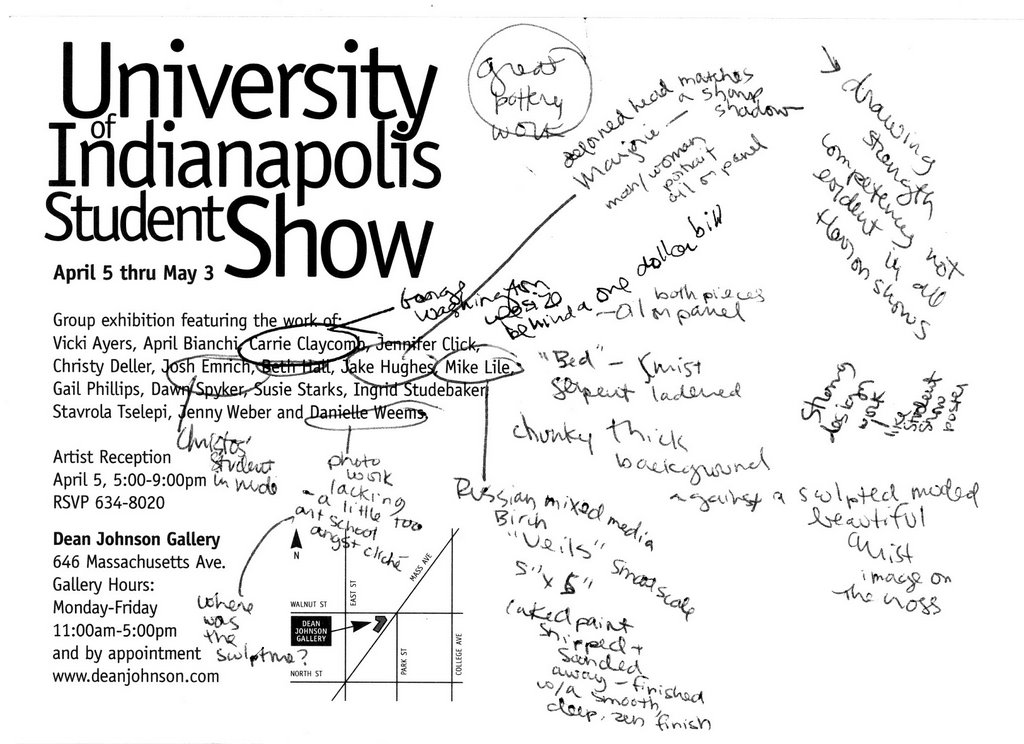
University of Indianapolis Student Show – Dean Johnson Gallery – April 17, 2002 – 3 1/2 stars

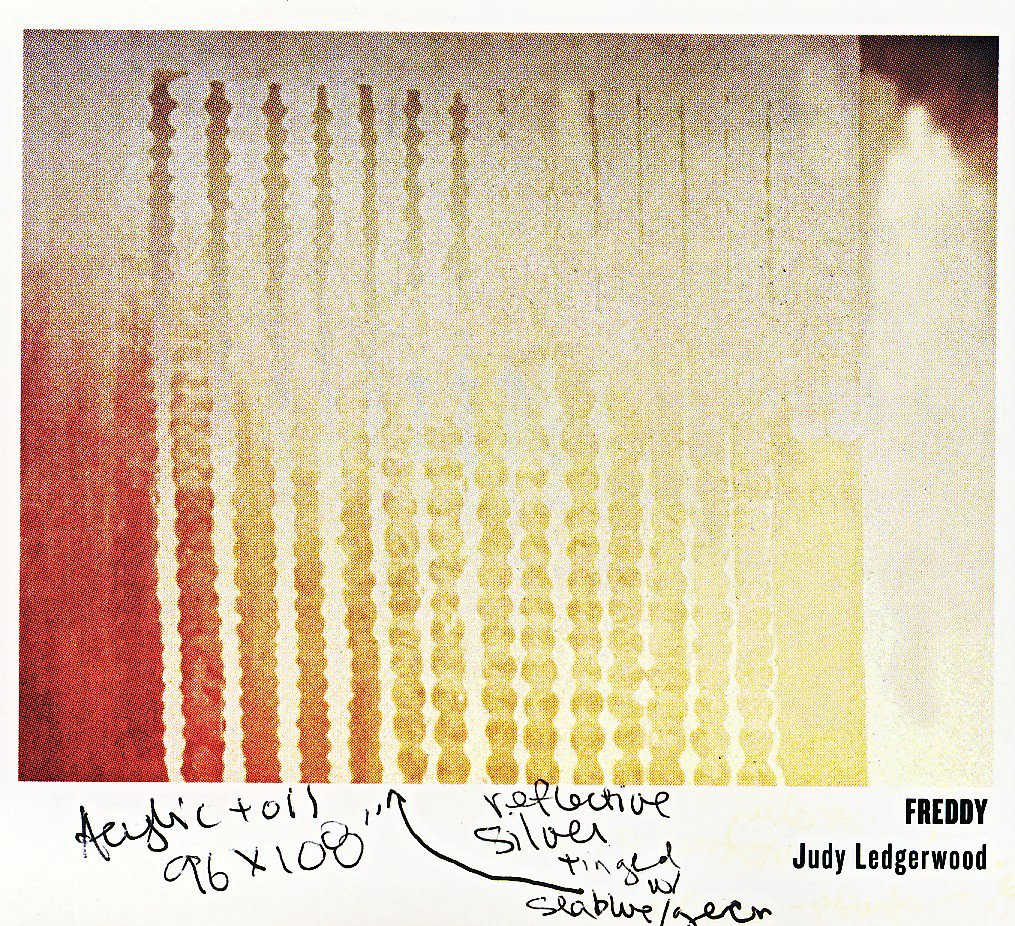
The scribbling on the postcard above are my notes for the critique below. That's how I write critiques - on whatever scrap piece of paper I have handy. I just usually need to write a key word to bring an image I viewed to life in my mind.
The gallery renews itself with refreshing new work by 16 students that smoothly knock most of the recycled, Herron-looking work at various Herron senior shows out of new art contention. Exceptions were the sculpture and photography, which were just a tad on the art school angst side. The show’s strengths are most evident in strong basic drawing competency and fluid graphic design as demonstrated in the student show poster. Josh Emrich offers technical and expressive maturity in his large-scale figurative painting while Carrie Claycomb's nearly life-size George Washington and Crucifixion paintings exhibit color and in-your-face composition confidence. A chunky, thick paint background frames a softly sculpted, molded image of Christ. Other paintings by Jake Hughes and Mike Lile serve as notable examples of real talent and visual refinement not always seen in local student shows. It is unfortunate that the opening reception had so few attendees when the work as this excellent. Through May 3, 2002; 317-634-8020, www.deanjohnson.com. -Mary Lee Pappas
Wednesday, April 10, 2002
“Symphony in Color, A Young People’s Art Contest” – Indianapolis Museum of Art – April 10, 2002 – 3 1/2 stars
“Learning to See: The Art of Art Education” – Herron Gallery - April 10, 2002 – 4 stars
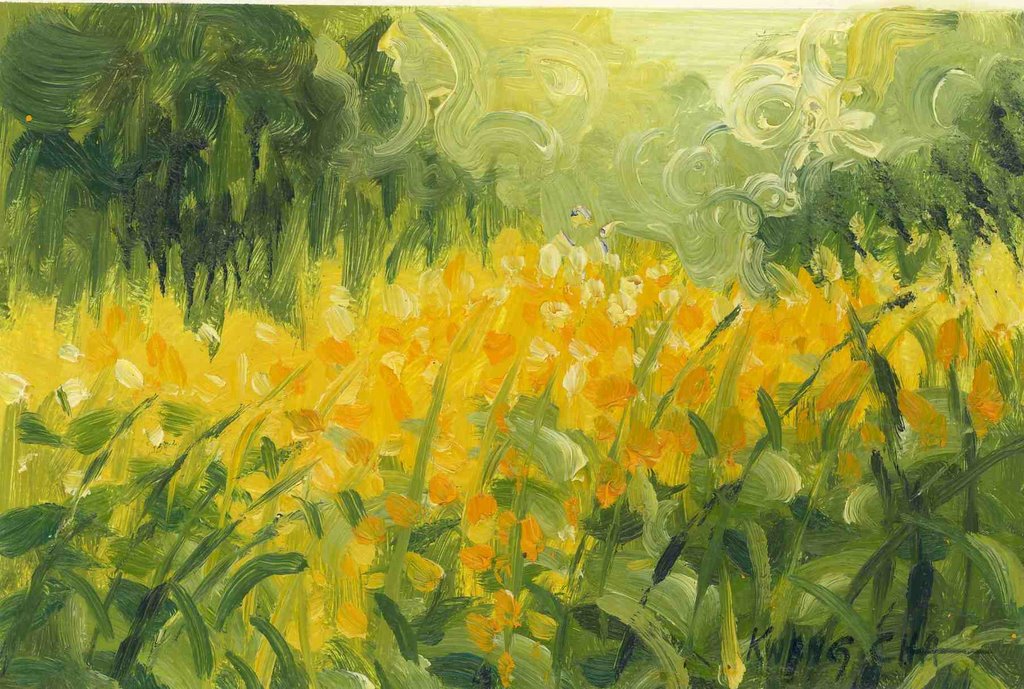
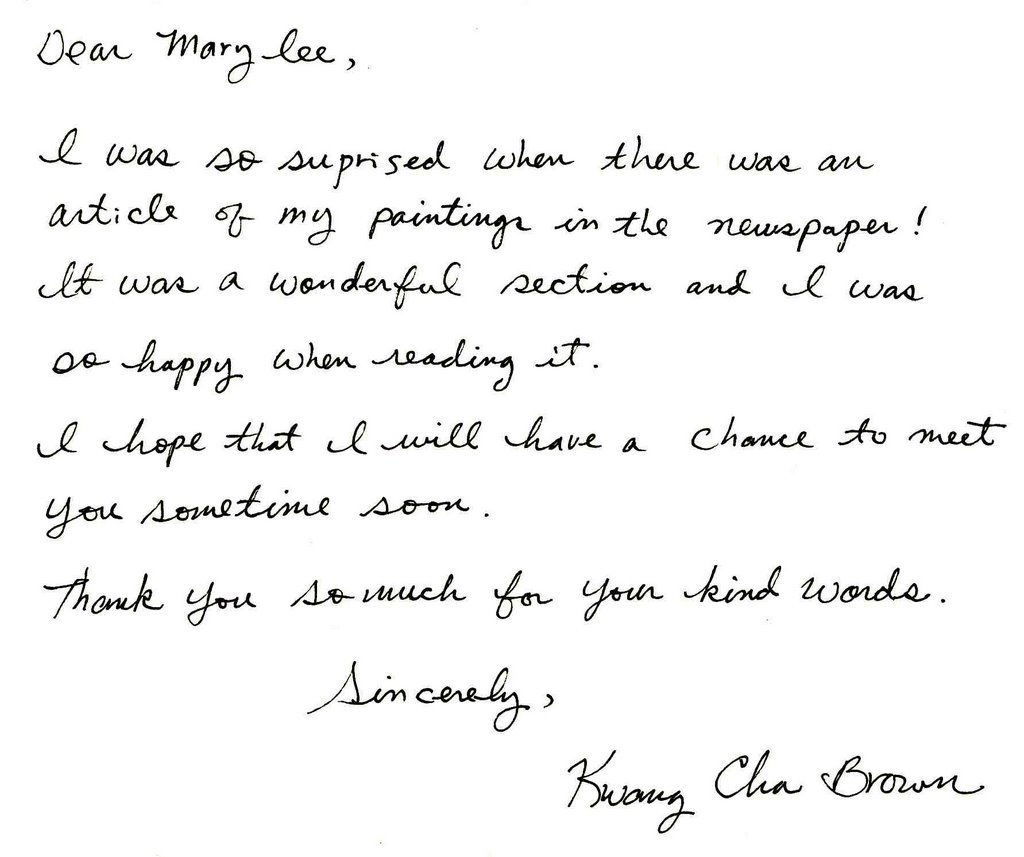
Kwang Cha Brown - CCA Gallery – April 10, 2002 – 4 stars

Three pieces by this Herron painting BFA, Indiana State University MFA and Pont-Aven School of Art attendee are masterful impressionistic paintings rich with the lush, deep tones of caked oil paint one would expect to see on museum walls, particularly when juxtaposed against most CCA sterile standards. Brush strokes look intentionally inspired, as if she is painting history or painting from her past life. One landscape's amber yellow grassy foreground, with its specific speckled strokes, sinks into its green grassy background. Visual appearances of atmosphere and light are brilliantly interpreted. Through May 31, 2002; 317-255-9633. -Mary Lee Pappas
Wednesday, March 06, 2002
Art stalwarts closing - March 6 - 13, 2002
Art stalwarts closing
NUVO Newsweekly, March 6 - 13, 2002
Page 8
Wednesday, February 27, 2002
“White Light” Joy Jackson – Harrison Center for the Arts – Feb. 27, 2002 – 3 1/2 stars

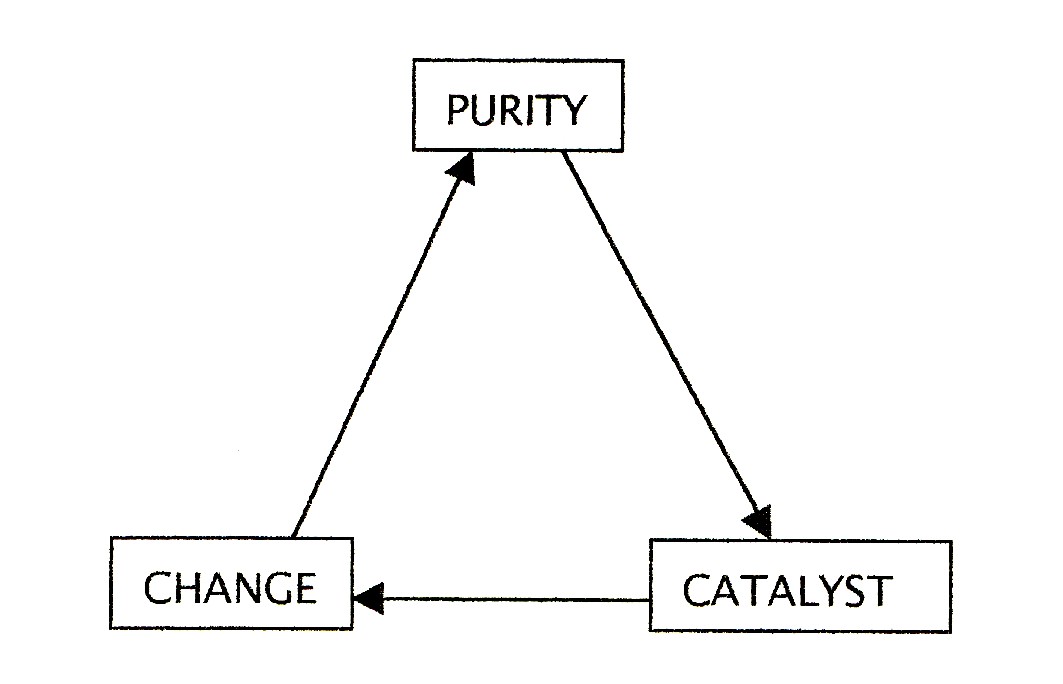
No relation (or inspiration) to the Herron show of last September by the same name, its examination of white light is less precise and simplified into a metaphor for purity as a catalyst for change. Jackson, who teaches glass blowing at the Indianapolis Art Center, having received her MFA in the subject at Temple University in Philadelphia, presents 20 clear, milky and white glass vases sitting upon suspended wire and perfecting eye-level glass shelving cutting across one of the gallery's corners. Jackson, an installation artist of talent, transforms the gallery space into her unique environment moreso than any other paintings-perfectly-centered-on-the-wall exhibit in this space has even come close to with lighting and installation, tic tac mask sculptures and glassware. A 2,000-pound Morton salt block installation is ghostly unnatural with its electric blue-tinged white light emitting from the crevices of the manufactured salt bricks. Under ownership of Redeemer Presbyterian Church the Harrison Gallery is improved with this exhibit as its proof, Through April 7, 2002; 317-514-6787. – Mary Lee Pappas
“Enchanted Bloom” Andrea Eberbach and Riccardo Consciasecca – Hilbert Conservatory, White River Gardens – Feb. 27, 2002 – 3 stars
Wednesday, February 20, 2002
“A Hobby Handed Down” Elizabeth Young – College Ave. Library – Feb. 20, 2002 – 2 1/2 stars
Brian L. Phillips - Barnes & Noble – Feb. 20, 2002 – 2 1/2 stars
Wednesday, January 30, 2002
Cheryl Paswater – The Bungalow – Jan. 30, 2002 – 3 stars
“Behold” Sandy Day and Sara Vanderkleed – Hoosier Salon – Jan. 30, 2002 – 2 1/2 stars
Greg Brown's misfit masterpieces
NUVO Newsweekly, January 30 to February 6, 2002
Page 8
Mary Lee Pappas
An eccentric repository for orphaned kitsch paintings, Utrillo's Art Gallery, appropriately named for a so-so artist whose work was mass-marketed in the 1950s, falls someplace between a thrift shop and a gallery. “I collect art from the thrift store,“ Greg Brown, artist an owner of Utrill's Art, states. Provincial grandma art, religious kitsch, student stuff, paint by numbers and 1950s schlock reproduction popular prints are among the genres of original kitsch art paintings he emancipates from thrift shop shelves. Some are kept for his personal collection, others are sold.
“More people’s paintings are going to end up at thrift shops the museums,“ Brown says. “Thrift stores make art valuable,“ and affordable for anyone to own.
Brown has been conducting misfit masterpiece search and rescue missions since opening his first shop at 10th and Rural in December 1994. That venue became a successful free-form arts space for five years, before moving to the current location at 3318 E. 10th St., where the focus is kitsch recovery and frame sales. Original fine’s cell anywhere from $5 to $500 to a clientele Brown described as “a real wide variety.“ He adds that some people are embarrassed to admit they like this instinctive, thrift shop sort of art. Regular Utrillo customers “are right across the social spectrum. All shapes and sizes and colors and economic conditions – everybody. It’s neat that way.“ Brown’s collecting advice is, “start cheap and work your way up.“
Brown is supporting the local arts in a very fundamental way. He understands, validates and celebrates the simplicity and necessity of self expression. He knows and already practices with the Arts Council of Indianapolis is preaching in their new the Arts Can Help add campaign: “The arts play an integral role in the daily fabric of our lives… We work hard to support the creative and meaningful work of our arts and cultural organizations as well as our local talented artist.“ The difference is they see “critical activities for the arts community," as their website and TicketCentral in the ArtsGarden, stating, “Your assistance is needed to help us continue to create the best climate for the arts to thrive."
The anonymous, untrained and amateur artists whose salvaged work winds up at Utrillo's paint in a style affectionately dubbed “naïve." Brown defines naïve artist as those “who have a sense of art history and strive to paint in a European style,“ though they actually have no training, sense of depth, composition or color. Creating art is purely joy filled and experiential for them. “I like that kind of sweet art,“ Brown explains.
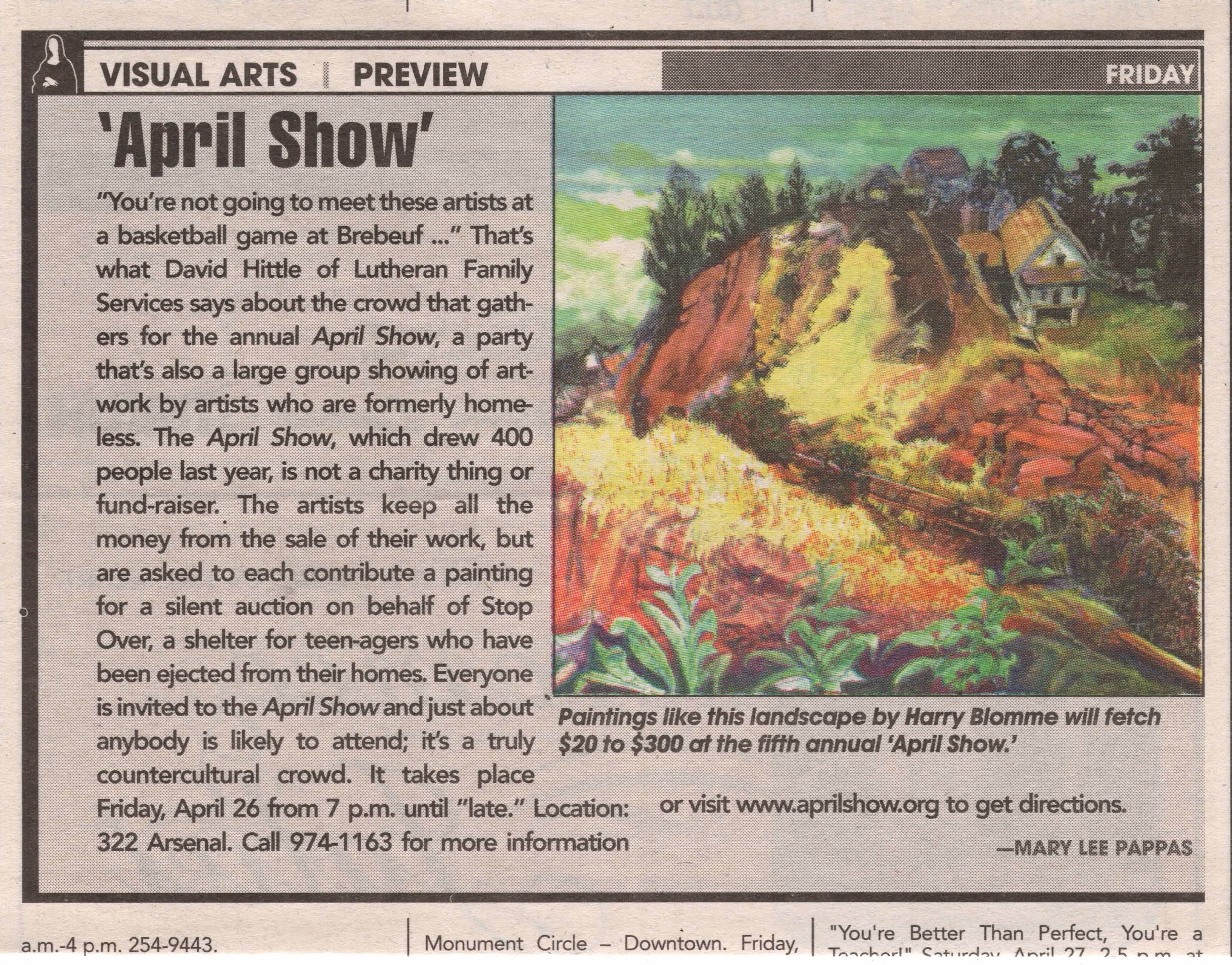
Some naïve art comes straight from artist to him without the second-hand retrieval effort. Jerome Neil, Jan Boyer and Harry Blomme are three such artist in Indianapolis who are represented at Utrillo's. “I try to promote stuff I love personally,“ Brown says. “Different artists have different needs for representation. I promote amateur art and naive art because I feel it’s important to validate."
Brown, who received formal art training at Indiana University in Bloomington, recently examined his fascination with naïve art by attempting to paint similarly styled figures. “One thing I was really bad at was figures. I thought, I’m gonna do something I don’t know how to do." Humbled, he gained valuable personal insight about how art should be approached. “That was the hardest thing.“ Brown says. “The simplicity embarrassed me. Why could I love it in somebody else and not love it for myself? That’s when I really started to examine my attitude toward art.“
Brown deduced the art he loved represented emotional, private and meditative qualities derived from the primary, free and flexible act of making art. Naïve art became for him, “people really trying really hard to do something they wanted to do." They are honest artistic efforts that liberate personal creativity, produce pride, create a sense of fulfillment and artistic accomplishment. Brown concluded that the sweeping demographic eureka, that anyone can paint, was precisely why he sells and collects this kind of work. “They do it for love and I think it comes through."
Brown adds, “Art is not for the elite anymore." The arts have to be for everyone now, as elitist dwindle and charitable anonymity seems passé. “It’s a breakdown of dominance,“ Brown says.
Paint by numbers kits, recently celebrated an annual exhibition at the Smithsonian, and once thought to be a violation of art by arts aficionados, testify to the power, need and desire for personal expression – even if simulated. Realistically themed kits introduced people to art, supplies, the process of creating, personal expression (albeit predetermined) and gave them works of art to hang in their homes. The paint by numbers paintings, which Brown collects, became a popular pastime in the 1950s when increased prosperity, consumerism and leisure time were on the rise. The art experience suddenly became easily accessible at an affordable price.
“People are starting to look toward art. The inherent experience of painting and being creative is a good common ground,“ Brown says. “The breakdown of the rules will disperse art into the general population. Some people will be offended and some people are gonna be thrilled. I see the universality of it, but I also insist on my own personal path." Brown knows the principle of joy that creating and observing art produces – and how that experience can be muddled or lost in the arts administration underbrush of grants, commissions or capital campaigns. Of his forsaken finds, he says, “They’re worth more than three dollars to me."
Jerome Neil
“This is my think tank,“ Jerome Neil said of his Wheeler art studio. Born and raised in Chicago, a lifelong Midwestern inhabitant, Neil has been humbly selling (his painting start at $65) and exhibiting his work here and there for four decades. The Wheeler has enabled him to pursue his newfound, full-time artist life. Paintings of airplanes, dinosaurs, trains, cowboys, landscapes, musicians, monorails, Dick Tracy, Roman soldiers and an R2-D2 portrait – “I’m on a Star Wars kick for the kids“ – are perched, displayed and stacked anywhere space allows.
“There’s no special topic. I paint what I want to,“ he says of his diverse imagery that stylistically hops, skips and jumps, from traditional tree filled landscapes to energy and people filled murals. “Figuring out what color you’re gonna to start with is hard, but they’re nope problem,“ he says of his even more different, yet proficiently composed, tribal and angular abstracts. Most of his can’t-pin-the-tail-down instinctive works are randomly named after song titles from his jazz record collection and fueled by his love of world history.
“That is it. That’s the main thing,“ he says of his passion for the past. A whole new series of Paris, London and Amsterdam Street scenes and architectural paintings, inspired by a recent tour of Europe with his children, have begun to creep across what little wall space is left. Could the painting of Notre Dame be named “April in Paris “or “Cool Boppin'"?
“It was wild taking a boat trip up and down the Thames,“ he recalls, explaining that he was too busy “taking in the sights" to paint there. He is currently executing dual images of Piccadilly Square: “All it is, is a place with a bunch of stores.“
Neil usually paints two or three nearly identical paintings, keeping the best of the set for himself. He toils with paint texture to achieve small strokes of painterly thickness as he elaborates on and enhances the finished work – a testament to his compulsive personal perfectionist tendencies.
“Changing light changes the color and movement and presents problems,“ he says if his ceaseless touchups on always evolving paintings. When asked why he painted in oils, Neil matter-of-factly says, “I like the smell of it. “
Wednesday, January 23, 2002
'Zeit ist Kunst" = Time is art
Art Review: 'Zeit ist Kunst' + Time is art
Artworks by Rae Witvoet and Klaas Weert
NUVO Newsweekly January 23 - 30, 2002
Mary Lee Pappas

Wednesday, January 16, 2002
Annual Herron School of Art/IUPUI Senior Photography Exhibit - Eye Blink Gallery - Jan. 16, 2002 - 2 1/2 stars

Uninhibited spice of life variety is the usual fare at student shows, whether it be Herron or high school, because exploring all media is still available, creativity is encouraged and competitive and the inevitability of a non-art day job has yet to kick in. This body of senior Herron photo work, as a whole, doesn't quite hit the experimentation or risk-taking level that an art school education should allow. An animal rights interactive installation of fur coats and photos does effectively force viewers to participate voluntarily and react/think involuntarily, howver. Overall, the artists' work didn't look challenged from a subject/content perspective - their talents not pushed beyond technically commendable work. But the black and white farm animal images were well-composed and had a personality all their own. Through Feb. 28, 2003; 317-636-6363. -Mary Lee Pappas
Scott Westphal - Munce Art Center - Jan. 16, 2002 - 3 1/2 stars
Wednesday, January 09, 2002
Lyanne Musselman – Out Word Bound – Jan. 9, 2002 – 2 stars
The Photography of Ben Winans of Brookville, Ind., 1902-1926 - Indiana Historical Society – Jan. 9, 2002 – 3 1/2 stars
Wednesday, December 12, 2001
The Photography Gallery - The Stutz Business Center - Dec. 12, 2001 - 3 stars
Wednesday, December 05, 2001
Night Vision - Utrillo's Art – Dec. 5, 2001 – 3 1/2 stars
Holiday One Piece Show – Dean Johnson – Dec. 5, 2001 – 2 stars
Wednesday, November 21, 2001
Jo Legner - Hot House Gallery - Nov. 21, 2001 - 3 stars

Subtle kink meets collage in Legner's loosely lurid, bold, black-outlined Japanimation girl paper mosaics. Beautiful and delicately printed Japanese, Thai and English papers are chopped up (most in 2-inch blocks) and reassembled to give life to her large-scale, convincingly innocent (and one or two not so innocent) and, dare I say, cute, sexy cartoon girls. The fairy straddling a flower, the blue girl spread-eagled on the phone, the bunny-girl investigating carrots, the bare-breasted kitty-woman and the other girls on revue are all perfectly composed for their square format, as if they were individual animation cells. Hardly a parody, these pieces are wildly lively, with a fresh sense of freedom and fun in art, yet are created with care and accomplishment. Legner has a keen artistic vision to be able to piece together seemingly unlike paper colors and textures and then have the end results create the right balance of depth and space for her caricatured beauties. Through Dec. 31, 2001; 686-0895. - Mary Lee Pappas
Tuesday, November 20, 2001
Why Collect Art? by Mary Lee Pappas - Nov. 20, 2001
Wednesday, November 14, 2001
Lynn Thomsen - Woodburn and Westcott - Nov. 14, 2001 - 3 1/2 stars

Thompsen's art is about where we are and where we live. Her pastoral, predominantly green paintings aren't just of the typically expected rural Boone County fields and southern country meadows, but of Eagle Creek and the ultra urban woods of Butler University. The sense of depth and definition in theses scenes is outstanding considering the swiftness at which the strokes look smattered, albeit intentionally, on the paper. Her true color farming fields carry an all too familiar feel that anyone who has driven anywhere in Indiana can appreciate. Thomsen is a skilled artist who fearlessly puts paint down, confidant about space and reality. Through Dec. 31, 2001. 916-6062. - Mary Lee Pappas
**********
Lynn Thomsen, July 30, 1957 - January 3, 2008

Thomsen, Lynn,
January 5, 2008
Indianapolis Star
Lynn Thomsen She passed away at 10:45 a.m., January 3, 2008 at the IU Medical Center, Indianapolis. She was born in Lafayette, IN on July 30, 1957, and lived with her parents in Delphi, until her graduation from Delphi Community High School in 1975. She graduated Summa Cum Laude with a B.F.A. from Herron School of Art in Indianapolis. She went on to teach at Marion College, IUPUI, St. Richard's School, and for the past 7 years she chaired and taught in the Art department at Park Tudor School. Lynn was a landscape artist, and concentrated on scenes of rural Indiana. She has works hanging at the IU Medical Center, The Anderson Hospital, Women's Wing, and in the permanent collection of Indiana artists at the Indiana State Museum, along with many private collections. Lynn was the court room artist at the 1992 Mike Tyson Rape Trial where her drawings were aired on Channel 6 News and ESPN. She currently has a 22 piece show at the Mary Anderson Center for the Arts, Loftus House Gallery, 101 St. Francis Dr., Mount St. Francis, IN. The exhibit will run through March 1, 2008. She is survived by her husband, Clifford Hull, her stepson Clifford Jr., her parents Cliff & Jean Thomsen of Delphi, IN, one brother, Eric (wife Carole) of Delphi, one sister, Teresa Holeman (husband John), of Charleston, S.C.; 4 nieces; Amber Cleavenger (husband Kyle) of Colburn, IN, Cassandra Rowley (husband J.T.) and Erienne Thomsen of Terre Haute, IN., Justine Holeman, of Charleston, S.C., as well as 3 great nephews and innumerable wonderful friends and colleagues. A celebration of her life will be held on Monday January 7, 2008 at 4:00 pm at Flanner & Buchanan Funeral Center-Broad Ripple with a gathering starting at 12:00 pm to service time. Persons wishing to express their condolences may do so by recycling. In lieu of flowers, donations can be made to the Coburn Place Safe Haven 604 E. 38th Street Indianapolis, IN 46205.
**********
In Memoriam: Lynn Thomsen
by Barb Shoup Jan 16, 2008
NUVO

When Lynn Thomsen and I traveled through France together in 1994, she carried a packet of blank cards wherever we went and made sketches on them, which she sprayed with fixative and sent home as postcards to family and friends. I was fascinated by what caught her eye. The pattern of stones beneath the running water of a river, the peeled paint of a shutter were as interesting to her, as worthy of her attention as the Eiffel Tower or the Louvre. She made a sketch of me to send to my husband — not at Monet’s Giverny, but in the corner of a straggly garden down the road amidst hollyhocks whose petals were crumbling to dust.
“You were made to set here to give voice to this, your own astonishment,” the writer Annie Dillard said. Lynn was astonished by everything, and spent her whole life spinning her astonishment into marvelous forms, imprinting herself on the world around her. Art and life were the same thing to her.
There she is in the whimsical living space she created, a loft in an old building on 30th Street, with hornets’ nests, still on their branches, hanging from the high ceiling and birds’ nests, rocks, shells, geodes — bits of the earth she collected, wandering. There’s a fabricated steel swing big enough to hold two people that she hung in the middle of the huge room. A gargantuan blackboard she salvaged from an old school and mounted in her kitchen, chalk tray included. A cat stairway with a nifty bridge to a sleeping perch — because every living being was accommodated in her life.
Lynn’s astonishment at being alive shimmers in her paintings hanging on the walls: luminous plowed fields, trees mirrored in summer-calm lakes — the light in them as real as the light pouring in through the huge loft windows.
You can see the fruits of it in the lives of hundreds of students whom she loved and taught, and who adored her, instinctively understanding that she was not only teaching art, but teaching them how to be. Her countless friends knew it when, again and again, she directed our attention to some small thing that made the world crack open in a way we’d never have imagined and, in doing so, lightened our heavy hearts.
Lynn’s time in the world she loved was far too short. But the light she made wherever she went will live among us always.
Kyle Blevins "The Dead Bird Series" - Eye Blink Gallery - Nov. 14, 2001 - 4 stars

Blevins' large 20-inch-by-24-inch glossy prints taken from a huge Polaroid at Columbia in Chicago are hardly morbid or grotesque, but poignant. One little goldfinch is at rest among brittle, dried roses, the colors of which are dulled and dreamy. They romantically convey a sense of peace. The photos evoke memories of life and loss, giving the show a particularly timely and universal quality. Through Dec. 31, 2001. 636-6363. - Mary Lee Pappas
* The son of a funeral director, Blevins recognized that these discarded lyrical and romantic metaphors for life and soul were sadly and ironically dead and found a deep profundity in the ignored and forgotten, yet still beautiful bird life. He collected some dead birds and encased them in liquid latex like bugs in amber, which were either suspended in sheets of glass or shadow boxed, then photographed.
Wednesday, November 07, 2001
Jennifer Kaye - Harrison Center for the Arts - 3 stars

Wood craft and fine art mesh well in Kaye's fanciful women wall sculptures. Her many matrons prance and strike pirouettes in their polka-dot painted dresses and their crescent moon limbs across the gallery walls. These simple in concept sculptures are executed with refinement. Local interior designers would have a hey-day decorating with her stuff. Through Nov. 13, 2001. - Mary Lee Pappas
Thursday, September 27, 2001
Lisa Lynch Habegger - The Bungalow - Sept. 27, 2001 - 3 stars
Thursday, September 20, 2001
"Herron Travels III" - Harrison Centre Gallery - Sept. 20, 2001 - 3 stars
with few strokes and with a minimal and dim palette. An obvious scholar of the color wheel, Joseph Sikora's three "La Bois D'Amour Rouge" pieces are, landscapes in black, orange, periwinkle, pinks and reds, swiftly and precisely dappled where the landscape illusion requires it, a green line down a red tree trunk for shadow. Shannon McClane's "The Horse Trainer" is another skillful mentionable. Photos, installation, ceramic sculpture and paintings make up this show that's not really exciting, but not bland either. Through Sept. 26, 2001. 317-920-2494. -Mary Lee Pappas
Thursday, September 13, 2001
"White Light" - Herron Gallery - Sept. 13, 2001 - 4 stars

White Light is divine. It accomplishes what it sets out to do, which is to demonsrate the idea of white light as spiritual pure awareness and as an art image itself when light usually only effects the artistic final product. The appropriately named curator, Barry Blinderman, expresses the collective work best in the exhibition brochure. He states, "Light is the oldest and most pervasive visual correlate for attainment and inspiration." All notions of white light (aura, technology and otherworldly) are explored in the works presented. Natural white light is embodied in an untitled photorealistic painting by Jack Goldstein of lightening; while hot solar white light is produced by stepping an a pedal that ignites a blinding 50 light bulb installation by Gregory Green. Two 20-inch-by-20-inch paintings by Christian Garnett resemble eletric currents emitting blue hues -
blue is usually mixed with red/yellow to create electric bulb white light found in the likes of all, arguably uninspirational, color TVs. Two paintings by Susie Rosmarin, one striped and one plaid, mesh multiple spectral colors, generating far-out altered consciousnesslike white light speckles when you close your eyes after viewng. One hundred and twenty prisms, lit by the basic gallery track lighting, rotate slowly producing gentle, bubbling, ghostlike shadows of psychic white light on the gallery walls. Attending this radiantly inspired (pun intended) exhibition, perfectly suited for the Herron Gallery, will enlighten your art consciousness. Through Sept. 29, 2001; 317-920-2420, -Mary Lee Pappas
Phil Campbell "Him and Her" - Hot House Gallery - Sept. 13, 2001 - 3 stars

Campbell's latest work is probably his personal best. A bold light blue wll, demonstrating his shrewd curatorial competency, is a backdrop for 20 intimate 5-inch-by-7-inch nude black and white watercolor portraits of him and girlfriend-muse Jo. A triptych of her inspirational image carries the same rich blue hue. Some images are derived and distorted from digital photos, though they appear to be true to life. A graceful arm branches from an indefinable body and a nude fetal positioned seff-portrait is subtly and paradoxically missing Campbell's head. The clever exclusions are delicate and almost subliminal. The levels of comfort and ease with the paint application are apparent when you investigate the all-in-a-row wall of perfectly aligned tiny nudes. The richness of gray tone is parallel to the softer, more comfortable brushstrokes while the heavier, tighter lines equate to the more severe black/white contrast, The overall treatment is, by and large,dexterous and pretty impressive. Through Oct. 16, 2001; 317-686-0895. -Mary Lee Pappas
"Big White Idea" Mark Sawrie- 4 Star Gallery - Sept. 13, 2001 - 1 1/2 stars

Sawrie uses digital photo techniques to enhance and manipulate his inkjet prints on canvas. The black canvas backgrounds have a soft velvet depth and seem carefully painted. These pieces are executed with practiced, perverted perfection and technical polish. The images (cynical reality meets potentially noxious internal land) are not obviously pleasing, but their disturbing energy is quite overt. They are seemingly absent of provocation and purpose. "Mad Bunny," a Bugs Bunnyish, cartoon-looking, white pigment-based (which means the artists own semen in this case), is a bore. This art is out-of-date if the intention is shock value. All images unemotionally emerge (red and white tones) from a deep void of space with a high contrast of lights and darks. Visit his website at www.moralunderwear.com to view more of his work. Closed Sept. 1, 2001. 317-636-6382. - Mary Lee Pappas
Thursday, August 16, 2001
"Sea Key" Matt Berg - Indianapolis Museum of Art - Aug. 16, 2001 - 1 star
Thursday, August 09, 2001
Delbecq Sisters - City-County Building - Aug. 9, 2001
"I See Rhythm" Michelle Wood - Indiana Historical Society - Aug. 9, 2001 - 3 stars
"Apron Strings: Ties to the Past" - Indiana Historical Society - Aug. 9, 2001 - 2 stars

One hundred aprons should demonstrate the shifting work roles of women and men over the century. Aprons traditionally have been tools of women's labor and consequently women's history, which is often overlooked - as it is in this exhibit. The aesthetic range of the apron collection is great, from ruffle-trimmed organdy and gathered tulle numbers of the to Aunt Bee bibbed styles. They hang too clustered together like campy flags of kitchen coats of arms. The collection reflects fashionable trends and some leisurely church bazaar creativity in the mid-century while overlooking most of the rest of the century (only a few examples from the early part of the 20th century are present) and is not representative of all female lifestyles. The opening exhibit script states, " Aprons are more than kitsch," and suggests ceremony and knuckle-bloody hard work, but does nothing to elaborate on how the apron, as a utilitarian protective garment, was an essential tool to the wife and unpaid domestic laborer. Kitsch is pushed in the collection and in the design of the small exhibition with its clumsy wire arched garden borders, suggesting a mythical happy whimsy. The few exhibit scripts slip sideways (you could crick your neck) in the clothespins that too cleverly hold them to the apron display forms. Women's history is represented with a much more discerning eye in other displays in the Exhibitions Gallery at the IHS. Through December 2, 2001. 317-232-1882. - Mary Lee Pappas
Thursday, August 02, 2001
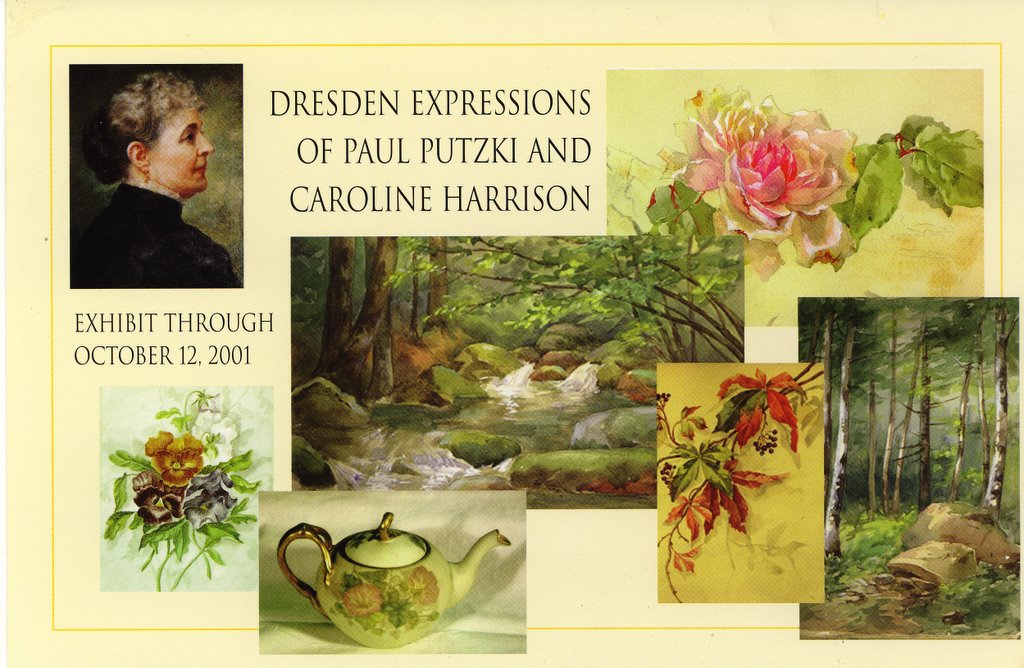
"Dresden Expressions of Paul Putzki and Caroline Harrison" - The President Benjamin Harrison Home - Aug. 2, 2001 - 3 stars

Putzki was a talented watercolorist with a school in Indianapolis were he taught the conspicuous Victorian ladies of leisure the fine art of the era - watercolor and china painting. Women, like the former First Lady Caroline Harrison, lead this fashionable Arts and Crafts hobby of the wealthy on millionaire row. True to Victorian form, Putzki and Harrison's paintings of floral blooms and sparrows are romantically realistic and accurately detailed though not quite the work of one with naturalist's sensibilities like another Victorian, Edith Wharton. Putzki followed Harrison to the White House so that she could continue her painting studies of seemingly stock suspended floral bouquets that typified the genre. Of particular beauty was a delicate and translucent image of orchids that grew in the White House conservatory. When the history of this prim epoch is explored in the Harrison home (a tour is a must to see the exhibit) alongside the wispy lifelike Valentine Day card appropriate pink cabbage rose compositions, the notable artistic talents of Harrison are vividly more apparent. Realistic nimble swabs of color, perfectly applied, effortlessly piece together idealized segments of a proper garden. Blossoms are bona fide in these floral illustrations. Through October 12, 2001. 317-631-1888. - Mary Lee Pappas
Thursday, July 26, 2001
"The Female Persona" Jack Hartigan and Michelle Pemberton - Easter Conservation Services - July 26, 2001 - 2 1/2 stars
Casey Cronin and Craig McCormick - Efroymson Gallery at the Harrison Center for the Arts* - July 26, 2001 - 3 1/2 stars

Abstract expressionism and post modernism through photography is brilliantly achieved in McCormick's work. His truly innovative images are shot through cardboard masks, and then further manipulated in the darkroom into subtle cubist renderings. Broken images of urban landscapes, sublimely colored, represent brief periods of time instead of singular split seconds typically seen in photos. Crises in his landscapes erupts, evolving in much the same way modernism did in painting. Reality is torn apart to create an illusion of the image (and the cars and things within the images) and of deep space. Technically, Cronin's work is pristine. Straightforward black and white untitled shots (mix and matchable) from European travels are artistically journalistic and rich with tone variance and a mausoleum silence. They are lonely and intimately bland. "The Laocoon Group," a full-round revolutionary Hellenistic sculpture at the Vatican Museum, is ironically photographed with some sculpture imagery negated from the cropped composition. The celebrated sculpture is spliced into a 2D isolated study. The range of grey tone beautifully defines the agony and realism of the ancient piece. Unfortunately, photo locations were not given and the architectural and sculptural subjects photographed were not named. The photos were dizzyingly displayed. They weren't hung in a coherent fashion and lost their impact split apart. Through August 31, 2001. 317-951-9610.- Mary Lee Pappas
*The Efroymson Gallery is currently the Harrison Center for the Arts Gallery at the Harrison Center for the Arts.
Saturday, July 21, 2001
Frank Glover - Durwyn Smedley's - July 21, 2001 - 3 stars
Thursday, July 19, 2001
J. David Smith - Munce Art Center - July 19, 2001 - 3 stars

Smith, associate dean of development for the Indiana School of Medicine, takes quality black and white photographs. His artist's statement says that he is inspired by "the ever changing forms and arrangements" of nature which are dissected
artistically by his camera. Local artists take note: This novice wrote a kick-butt, eloquent, well-written and understandable artist's statement. The series of photos on exhibit were all snapped during one walk in Zionsville after a memorably wicked snowstorm in 2000 - the cold miser undoubtedly being Smith's muse. The grandeur of neglected, tiny, fleeting beauty in nature takes center stage in tight compositions that make Mother Nature a Dada disciple. Ice and compacted fallen snow create natural artistic abstractions in "Ice Crystal," "Spider Ice" and "Holy Wall." There is nothing experimental or out of the ordinary with Smith's approach or technique. If I had to guess, I'd say he shot these with a trusty old Pentax K 1000. All of the shots are sharp, frozen, and perfectly exposed with studious exactitude - so much so that the f-stops and shutter speeds for each image could probably surmised as well. It is the care and honesty with which he captures his observations that make his photographs memorable. Through July 28, 2001. 317-873-6862. - Mary Lee Pappas
"Homecoming" Chip Henderson - J.Martin Gallery - July 19, 2001- 3 1/2 stars

Henderson throws narrative art out the window while bulldozing function for form in these mostly large monotone, smooth abstract, atmospheric works. They are musings of mood ripe with Zen and void of visual aversions. Far from being desolate, these subltely striped works evoke contemplative stillness with candlelight translucence. At a glance, the work of Rothko comes to mind, then vanishes upon inspection. These works are delicate. Sheer, careful rows of thinned oil make the canvases appear to be vellum. The dark crimson colors of the painting, "400 Miles," for instance, are formed and manipulated in a series of glassy layers that envelope each other like memories and shadows of our subconscious. The transparency of the paint is pushed and challenged by the infinate density of deep tones. Involuntary meditative participation is bound to occur while viewing these subliminal landscapes. Japanese paper and wax are the vehicles for earth-hued pigment in several pieces including "Hairshirt," the signature piece of the show. Through July 31, 2001; 317-916-2874. - Mary Lee Pappas
Thursday, July 12, 2001
"Sports Heroes - Two Views" James Fiorentino and Elizabeth Yorgen - National Museum of Art and Sport - July 12, 2001 - 2 stars

Thirteen true-to-life head and shoulders sports portraits by the mega accomplished James Fiorentino (23 years old) leave little to the imagination unless you are a student of watercolor. Executed deftly in watercolor, they are amazingly photo realistic and beyond perfect technically. You can see every hair on Cal Ripkin Jr.Ãs arm. Skin tones are rich and real, proportions are so anatomically faultless that it's no wonder Fiorentino was admitted into the New York Society of Illustrators at the tender age of 19. Images from the 1999 Topps Heritage Baseball Card series he created are on view also. In a big-time contrast are "Temple Games," four mixed media sculpture/conceptual works by Elizabeth Yorgen. Oozing glue gun goo, they comically portray basketball, hockey, baseball and football stars as "idolized in a very similar manner to the way that athletes were idolized in ancient Greece," an artists statement reads. It then makes a parallel to the Temple of Zeus in Olympia where these said athletes are were actually lapiths and the centaurs. Each piece has three humbly painted panels of athletes paired off in physical struggles (tackles and dribbles) flanked by four crude sets of wood colonnades. Could these athletes blasphemously be playing in the bastardized pronaos? Like friezes of the Classical Severe style, the scenes are dramatic, compact, and simple. A paint by numbers primary color scheme prevails as does a coloring book composition. Colors stay inside the lines with model plane precision. The pediments carry modern arena imagery flanked by 3D playing utensils: hockey puck, toy basketball hoop, you get the idea, etc. Through August 12, 2001. 317-274-3627. - Mary Lee Pappas
"Three Women Coming of Age" Patrica Rhoden Bartels, Caroline M. Mecklin, Maureen O'Hara - Hoosier Salon - July 12, 2001 - 4 stars

Patricia Rhoden (Bartels), Caroline M. Mecklin and Maureen O'Hara Pesta are three accomplished phenom female Indiana artists. Great impasto strokes of sunshine-enhanced color tease and delight the optic nerve in Rhoden-Bartels' impressionistic Indiana landscapes. The groundless compositions immerse you in dreamy, vibrant, fresh air moments full of wind and lively light. You fly through her distinctive paintings. Her work redefines Indiana art history and is nothing short of spectacular. Mecklin's prolific portraits of her beautiful daughter Libby are seductively silent and utterly feminine. Demure female forms are defined by their confident placidity - they are as much about the splendor of the female body as they are about female assurance within that body. Sweeps and streaks of sporadic and calculated colors combine to create contemporary pseudo odalisques from untraditional perspectives. Pesta's work is very poised. Her approach is less distorted and without the realistic excess or untrue vantages. Quiescent scenes are set and stories told through the precision in her exacting pastel lines. Through July 28, 2001. www.hoosiersalon.org. 317-253-5340. - Mary Lee Pappas
Christina Roberts and Lisa Pelo-McNiece - Art in Hand Gallery - July 12, 2001 -
Bam Miller - Indianapolis Artsgarden - July 12, 2001 -
Thursday, June 28, 2001
Cindy Wingo - White River Gardens - June 28, 2001 - 2 stars
Amy Falstrom - Woodburn and Westcott - June 28, 2001 - 4 stars

Falstrom's work evokes a meditative peace bemused with fantasy. Earthy, golden yellows trickle in layers over simple, analytical, animated brushstrokes. Cross-hatched, teal blues form a muddied, fertile earth ripe with June blooming flowers in "Silent Meeting." Transparent, filmy paint gradations reveal sketched petals of individual blossoms peering from the somber, sparse ground above which two bricklike feet stand - or float? A clay-toned, still waterscape, "Floating Stones," is suggestive of Monet's nympheas murals, but careful and atmospherically faery-touched. A small-scale diptych, "Little Mountains Sant Angelo," achieves depth and realism with masterful half-inch wide strokes - every brush bristle leaving a tale-telling testament to the artist's intentional yellow, green, blue and purple mountain landscape. Falstrom's warm oil paintings are illuminated with yellow hues, evoking a comfortable serenity and a spiritual tranquility. The soft gallery lighting compliments the calm mood of the work. The "Tangle" series of solitary, abstract, tangled, pseudo-organic masses breathe a life of their own. Falstrom's oil paintings, graphite and charcoal drawings are sublimely delightful. Her etchings are superb. Through July 7, 2001; (317) 916-6062. - Mary Lee Pappas